
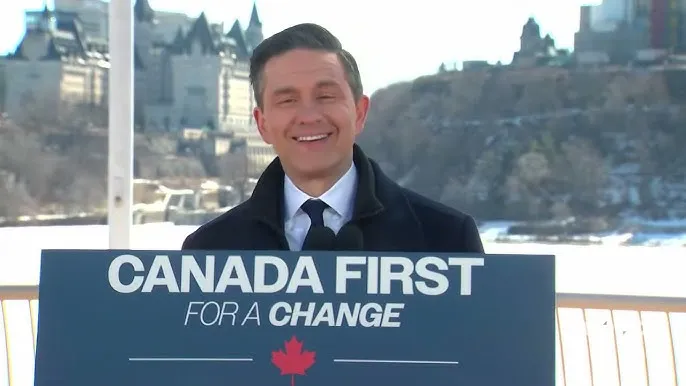
Conservative Leader Pierre Poilievre kicked off his election campaign Monday with a major promise: an income tax cut aimed at easing financial pressure on Canadians. Speaking in Brampton, Ontario, Poilievre said that if elected, his government would lower the tax rate on the lowest income bracket from 15 per cent to 12.75 per cent — a change he says would save the average individual about $900 annually and families around $1,800.
Framing the tax burden as a penalty for hard work, Poilievre said in a video posted early Monday that “taxes are the fine you pay for the crime of working hard.” The proposed cut would apply to every Canadian who pays income tax, though it wouldn’t be fully implemented until the 2027-28 fiscal year. Once in effect, the tax relief package is projected to cost the federal treasury $14 billion annually.
While affordability remains a top election issue, especially amid U.S. President Donald Trump’s looming trade war and rising costs of living, critics have been quick to question how the Conservatives plan to fund the substantial tax cuts. Poilievre responded by pledging to spell out the necessary spending reductions in the party’s official platform. He reiterated his promise to eliminate wasteful spending, slash the number of federal consultants, and enforce a dollar-for-dollar rule — requiring any new government expenditure to be matched by a cut elsewhere.
Foreign aid reductions are also on the table, according to Poilievre, who has previously suggested reallocating those funds toward domestic priorities like the construction of a new military base in Iqaluit. He assured supporters that full fiscal details, including numbers to support his cost-cutting strategy, will be made public in the upcoming platform.
The Conservatives’ tax cut announcement comes one day after Liberal Leader Mark Carney proposed his own tax reduction — a one percentage point cut to the lowest income bracket that would cost an estimated $6 billion annually and save an average family about $825. However, neither leader has yet provided complete details on how their respective tax cuts will be financed.
As Canadians head toward an April 28 election, both major parties are placing economic relief at the heart of their campaigns — but it remains to be seen whose fiscal promises voters will trust.
Originally published on Weekly Voice