
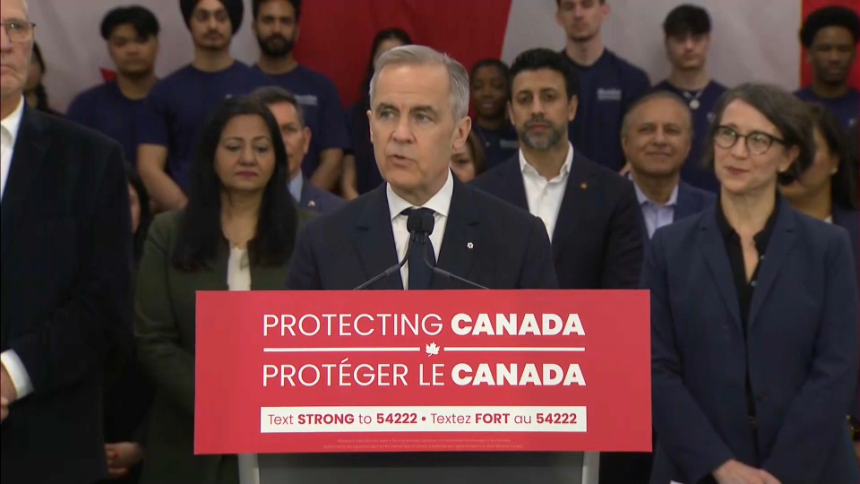
Mark Carney, the former governor of the Bank of Canada and a leading global financial expert, is entering the political arena with a bold promise: to unite the country economically and lead Canada into a new era of prosperity. His vision is centered on dismantling internal trade barriers, boosting national productivity, and investing heavily in critical infrastructure. Carney argues that Canada has been acting like thirteen separate economies, and that true strength will only come when wine from B.C., lumber from Nova Scotia, and energy from Alberta can flow freely across provincial lines. His plan to remove red tape and implement mutual recognition of qualifications, licenses, and safety standards aims to make Canada a seamless, efficient, and dynamic economy.
Carney’s economic strategy doesn’t stop at interprovincial trade. He wants to balance the federal operating budget within three years, cut wasteful spending, and reallocate government resources to catalyze massive private-sector investment. From AI to clean energy, from cyber-infrastructure to affordable housing, his plan involves billions in public-private partnerships designed to modernize Canada’s economy while ensuring long-term job growth. He proposes lowering personal income taxes, improving productivity through digital transformation in government, and ensuring that every federal dollar spent delivers maximum impact.
Housing is a top priority for Carney, who frames it as both an economic and a social crisis. He wants to double the pace of housing construction, aiming to build four million homes over ten years. To achieve this, he promises to cut development fees, streamline approvals, and scale up prefab and modular housing innovations. He’s also advocating to eliminate GST on homes under $1 million for first-time buyers, massively expand skilled trades training, and back co-ops and non-profit housing providers. Unlike his opponents, Carney blends free-market solutions with social investment, signaling a pragmatic approach to affordability that neither relies solely on private developers nor on government micromanagement.
On climate and energy, Carney is taking a centrist but assertive stance. He vows to scrap the consumer carbon tax and replace it with incentives for green choices, such as energy-efficient appliances, electric vehicles, and home retrofits. At the same time, he will hold large polluters accountable and invest in clean tech, carbon capture, and electrified transport. Carney sees decarbonization as both a climate necessity and an economic opportunity—claiming Canada can become a global leader in clean energy, AI, and digital infrastructure if it takes decisive action now.
Mark Carney is framing his campaign around a single, powerful idea: Canada can no longer afford to be mediocre. With the U.S. growing increasingly unpredictable and global markets shifting, he wants Canada to diversify trade, secure its Arctic and cyber infrastructure, and lead the world in the industries of tomorrow. His technocratic tone may contrast with the populist fervor of Poilievre or Singh’s grassroots appeal, but Carney is betting that Canadians are ready for serious leadership, serious policy, and a serious investment in their collective future.
Originally published on Weekly Voice